Article • 8 min read
What Lightning Bolts Do to Water
Introduction
Have you ever noticed how the air feels different after a thunderstorm? There's a crispness, a freshness, a certain energy that seems to make everything come alive. That feeling isn't just in your head, it's the result of a powerful natural process that occurs when lightning interacts with the atmosphere and, importantly, with water.
What lightning does to water is one of the most fascinating phenomena in nature, and it holds the key to understanding why ionized water is so powerful. The story of this knowledge stretches back over a century, with deep roots in Japanese science and culture, a culture that happens to be home to the longest-living people on Earth.
Nature's Electrification
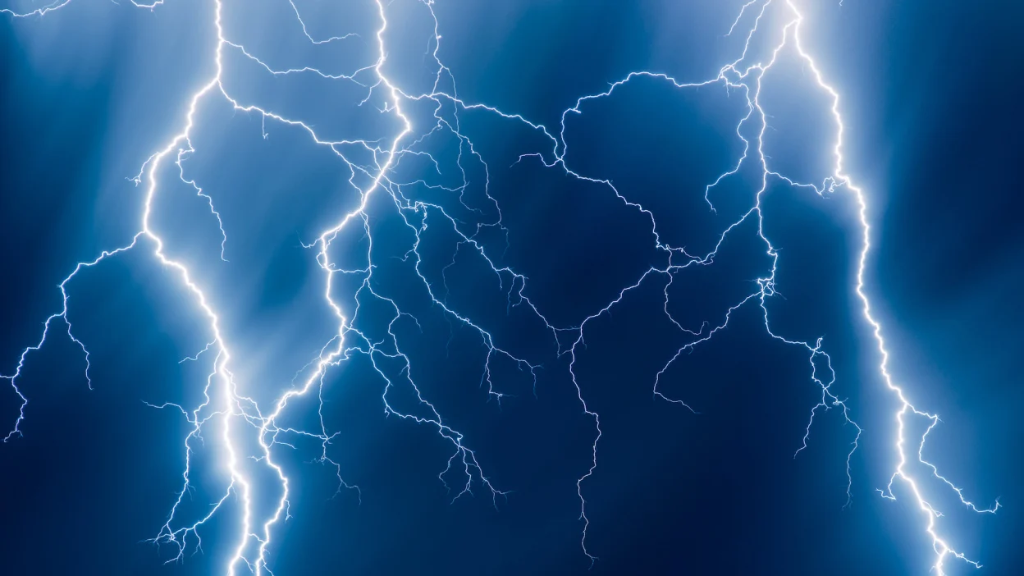
When a lightning bolt tears through the sky, it carries millions of volts of electricity. That electrical discharge doesn't just light up the heavens, it interacts with everything in its path, including the moisture in the air and the water on the ground. The immense electrical charge splits water molecules apart, creating charged particles, ions, in a natural process of electrolysis.
This is the same fundamental process that a water ionizer performs, but on a staggering, planetary scale. Lightning is nature's own water ionizer. It takes ordinary water and, through sheer electrical force, transforms it into something different, something charged, something alive with ions.
After a storm, rainwater carries these altered properties. The water that reaches the earth has been electrically charged, its molecular structure shifted, its pH potentially elevated. This is why the world feels refreshed and renewed after lightning, nature has just performed its own version of water ionization.
Japanese Origins
The understanding of electricity's effect on water didn't begin in a modern laboratory, it has deep roots in Japan. In the early 20th century, Japanese scientists began studying what happens when an electrical current is passed through water. They were fascinated by the same principles that lightning demonstrates in nature: that electricity can fundamentally alter water's properties.
Japan has a long tradition of reverence for water. In Japanese culture, water is not just a resource, it's sacred. The practice of misogi, a Shinto purification ritual, involves standing under waterfalls to cleanse the body and spirit. The Japanese recognized, long before modern science, that water had properties beyond simple hydration. They understood intuitively that water could be alive, charged, and transformative.
Building on this cultural foundation, Japanese researchers in the 1950s developed the first practical water ionizer machines. They studied how electrolysis, the same process that lightning performs in nature, could be harnessed and replicated in a controlled way. The goal was to recreate the living, charged water that nature produces in a thunderstorm, but in a form that people could access every day.
The company behind the LeveLuk K8 is a Japanese company that has been refining this technology for decades. Their machines are built on the principles first explored by those early Japanese scientists, principles that trace back to the observation of nature's own electrical water transformation.
The Longest Lifespan on Earth
Japan is home to the longest-living people on Earth. Japanese men and women consistently top global life expectancy rankings, with many living well into their 80s, 90s, and beyond. The island of Okinawa, in particular, is famous for its concentration of centenarians, people who live to be 100 or more.
While diet, community, and lifestyle all play important roles, the quality of the water they drink cannot be overlooked. In Japan, water ionizers are not a niche product, they're a household staple. They're found in kitchens, hospitals, clinics, and restaurants across the country. The Japanese have been drinking ionized water for generations, and they understand something that much of the world is only beginning to discover: many people consider the quality and properties of their water to be important.
The connection is hard to ignore. The country that pioneered water ionization technology, that has a cultural reverence for water's living properties, and that has been drinking ionized water for decades, also happens to be the country with the longest lifespan on Earth. That's an interesting correlation, though diet, community, and many other factors contribute to longevity.
The Science of Lightning & Water
So what exactly happens when lightning interacts with water? When an electrical discharge passes through water, it causes a process called electrolysis. The electrical current forces the water molecules (H₂O) to split into their component parts: positively charged hydrogen ions (H⁺) and negatively charged hydroxide ions (OH⁻).
This splitting creates two distinct types of water. The alkaline portion, rich in OH⁻ ions, has an elevated pH and carries a negative electrical charge, what scientists call a negative oxidation-reduction potential, or ORP. This negative ORP is the property most often associated with antioxidant activity in laboratory measurements.
Lightning also produces ozone (O₃) and nitrogen compounds that dissolve into rainwater, further altering its chemistry. This is why rainwater from a thunderstorm has a unique smell and feel, it has been chemically transformed by the electrical energy of the storm.
The Electrolysis Connection
The connection between lightning and water ionizer machines is direct and fundamental. Both perform electrolysis, the process of using electricity to split water into its charged components. Lightning does it with millions of volts in a fraction of a second. A water ionizer does it in a controlled, precise way using platinum-coated titanium plates and a carefully calibrated electrical current.
The difference is control and consistency. Lightning is unpredictable and uncontrolled, it electrifies water randomly, wherever it strikes. A water ionizer brings that same natural process into your kitchen in a form you can use every day, producing consistent, high-quality ionized water on demand.
In essence, a water ionizer is a way of harnessing the same electrical transformation that lightning performs in nature, but in a form that's reliable, repeatable, and available whenever you need it.
Modern Ionizers
Today's water ionizers, like the LeveLuk K8, represent the culmination of decades of Japanese research and engineering. They use multiple electrolysis plates, in the K8's case, eight platinum-coated titanium plates, to perform a thorough and efficient ionization process.
These machines don't just replicate what lightning does, they refine it. They give you control over the process, allowing you to select different pH levels for different purposes: drinking water at pH 8.5 to 9.5, strong alkaline water for cleaning at pH 11.0+, beauty water for skincare at pH 5.0 to 6.0, and more. Lightning gives nature a broad, uncontrolled dose of electrified water. A machine gives you exactly the right type of water for exactly the right purpose.
Conclusion
The next time you watch a thunderstorm roll in, think about what's happening to the water in the sky. That lightning is performing the same process that Japanese scientists studied and refined into the water ionizers we have today. It's nature's way of creating ionized water, charged, alive, and full of properties that ordinary water simply doesn't have.
The Japanese understood this connection between electricity and water long before the rest of the world. They built a culture around the reverence of water, pioneered the technology to ionize it, and became known for their longevity. That legacy lives on in every glass of water that comes from a quality ionizer machine today.
Lightning shows us what nature can do. A water ionizer brings that power home.
These statements have not been evaluated by the Food and Drug Administration. Our products are not intended to diagnose, treat, cure, or prevent any disease. Talk with your doctor about any health questions.
Back to Home